
Inverted Magnetron and Hollow-Cathode Plasma: Copper Sputtering and Vacuum Improvements
Etto Fins Experiment · Experimentalplasma physics· November 2026
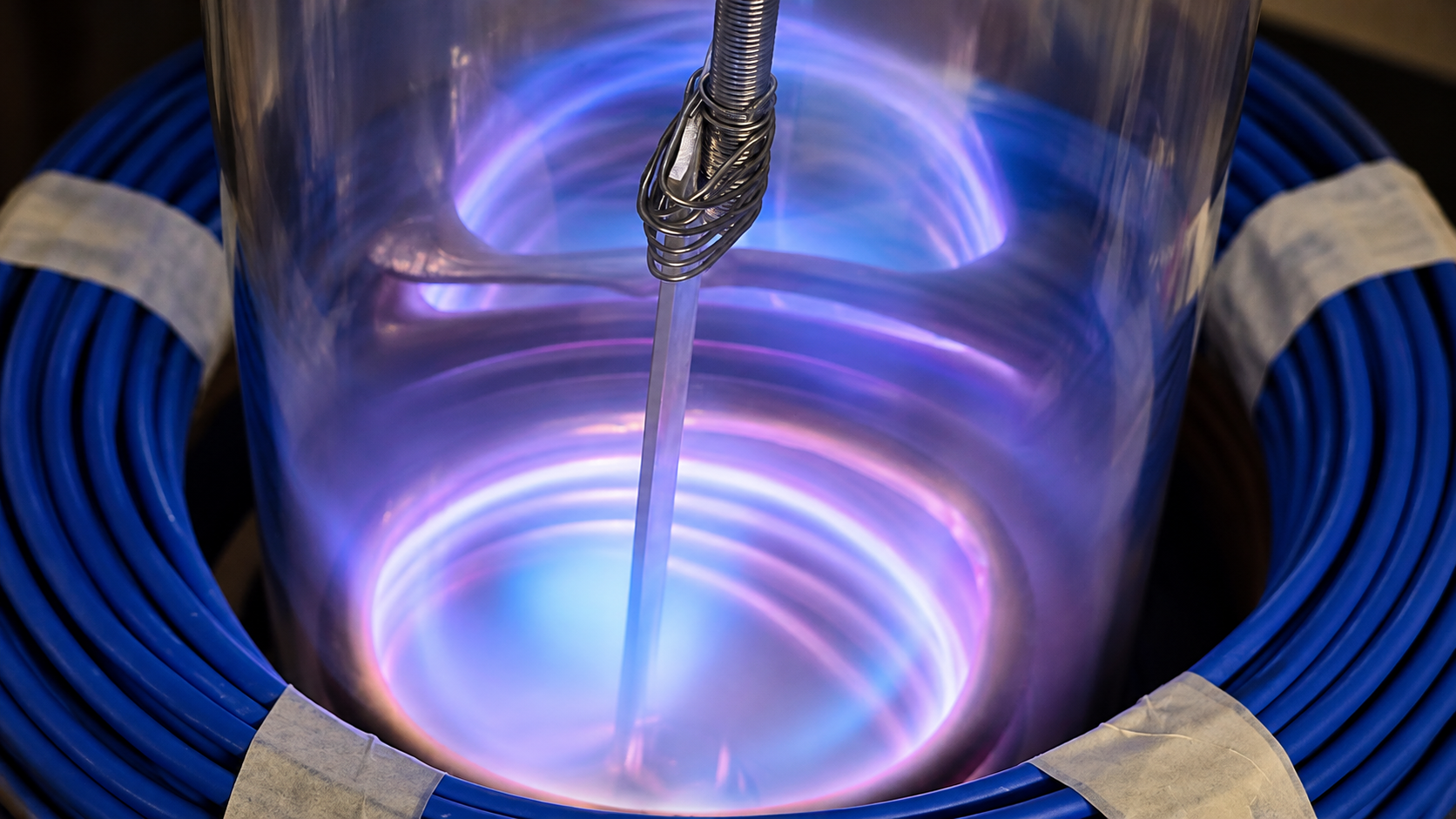
In this experiment, I redesigned the vacuum chamber and introduced aninverted magnetron configurationin which a copper helix is the sputtering target and a central electrode is the intended deposition surface. The resulting low-pressure discharge provides an opportunity to study hollow-cathode-like effects, electron transport, and plasma–surface interactions.
1. Reducing the gas load from the chamber end seals
Earlier experiments indicated that outgassing from the high-density polyethylene (HDPE) end blocks was a major contributor to the chamber gas load. I installed metal disks between these blocks and the vacuum volume, and copper liners in the penetrations, so that no exposed polyethylene surfaces are present. This change greatly reduced the gas load and improved the conditions for plasma experiments.
2. Reversing the sputtering geometry
In the earlier arrangement, the central copper tube acted as the target. In the revised configuration, anouter, negatively biased copper-tube helixreceives the plasma-ion bombardment, while thecentral electrodeis the intended copper-collection surface. An external magnetic field is applied approximately parallel to the helix axis.
Positive ions accelerated through the cathode sheath can transfer momentum to the copper target and eject atoms from its surface. Most sputtered copper atoms are neutral; a fraction may reach and condense on the central electrode.
3. Hollow-Cathode Plasma and axial magnetic field
The helix presents two potentially interesting discharge regions: its overall internal cylindrical cavity and the adjustable spaces between neighbouring copper turns. Both of these regions exhibithollow-cathodeelectron trapping and enhanced local ionization.
The magnetic field also curves the paths of the electrons as they move towards the central electrode, increasing their path length, and thus their probability of ionizing a gas molecule.
4. An unexpected result: discharge extinction at low gas pressure
With the revised chamber and sputtering topology, the discharge became unstable and could eventually extinguish as the available gas pressure decreased. The lower background gas load, combined with increased deposition rates removing more of the residual air, brought the discharge below its sustainable operating range.
5. Video: the revised plasma discharge

Watch the experiment on YouTube Shorts.
6. Next steps
The broader motivation is to develop a method for reducing vacuum pressure and a better understanding of low-pressure plasma generation, electromagnetic confinement, and vacuum engineering for theField-Reversed Configuration (FRC). The discharge shown here is a sputtering plasma.