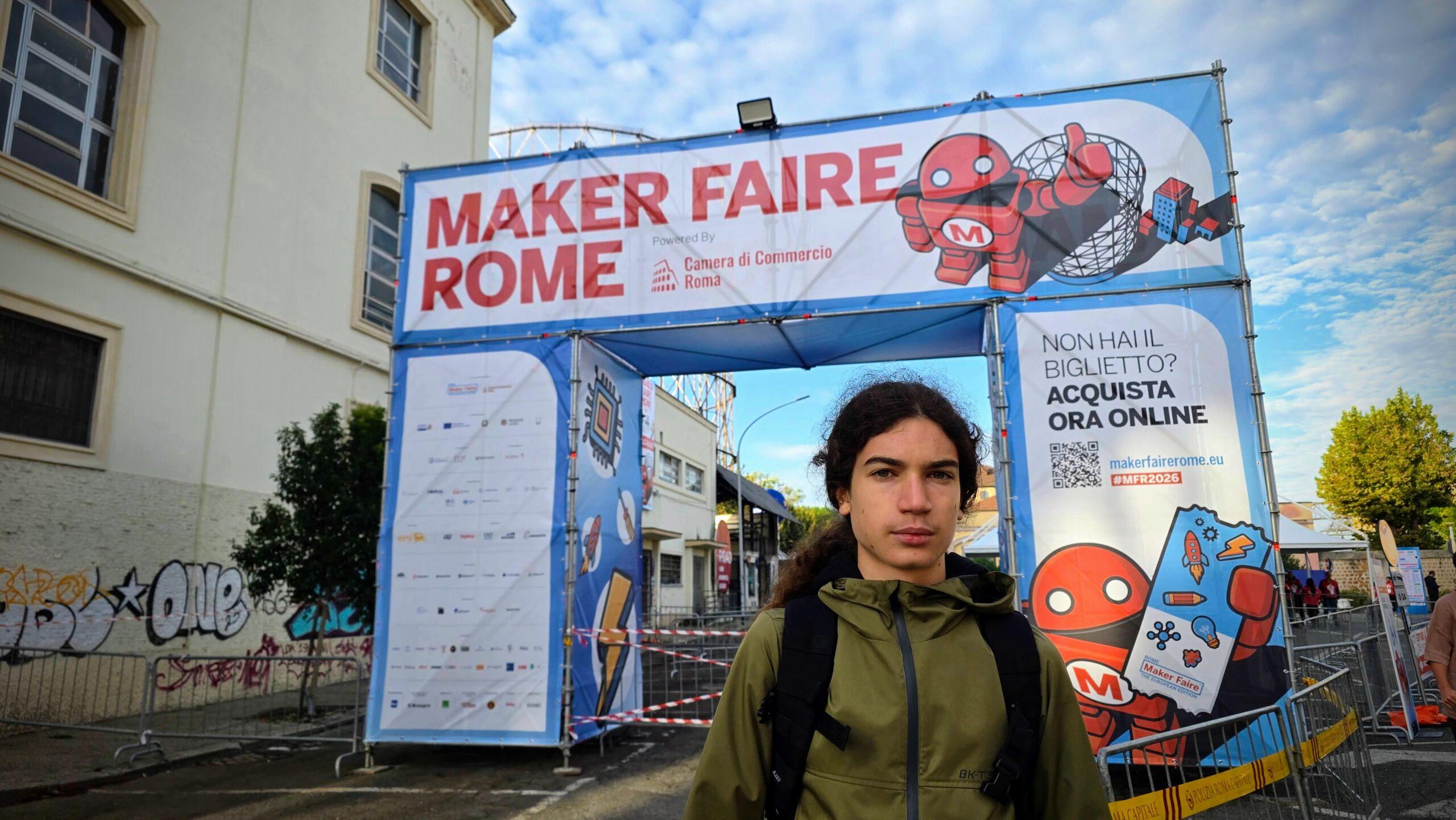
From our laboratory in Sicily to Maker Faire Rome 2026 #MFR2026
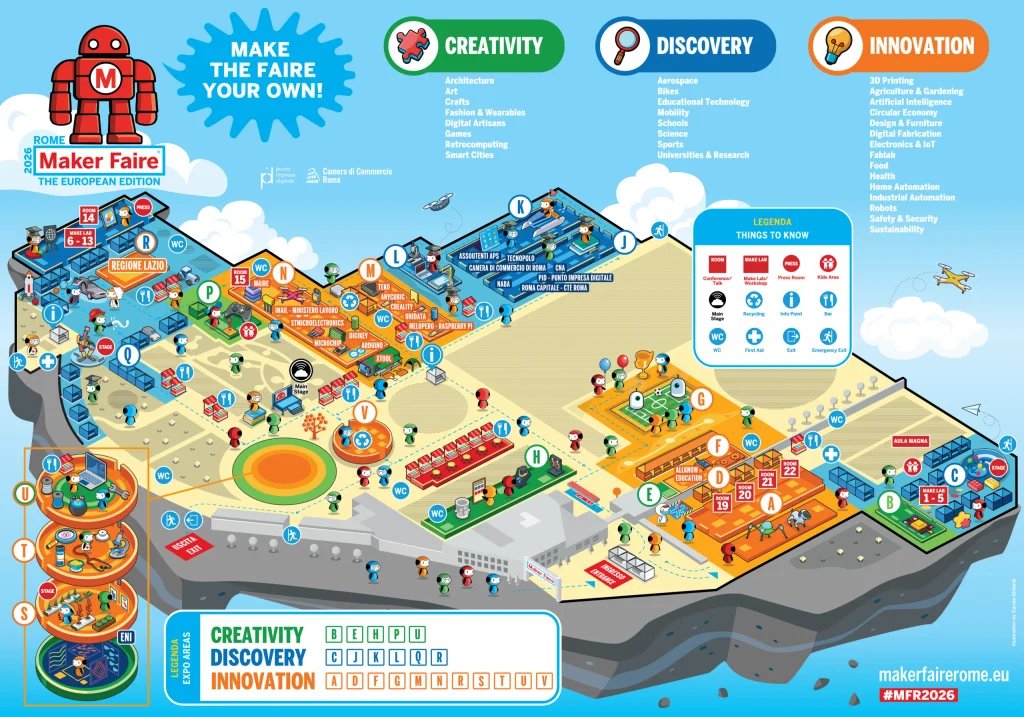
From October 23 to 25, 2026, I had the extraordinary opportunity to participate inMaker Faire Rome — The European Edition, one of Europe’s leading events dedicated to innovation, engineering, creativity, and the maker community. Held at the Gazometro Ostiense, the event brought together hundreds of exhibitors and thousands of visitors, from students and families to engineers, researchers, entrepreneurs, and technology companies.
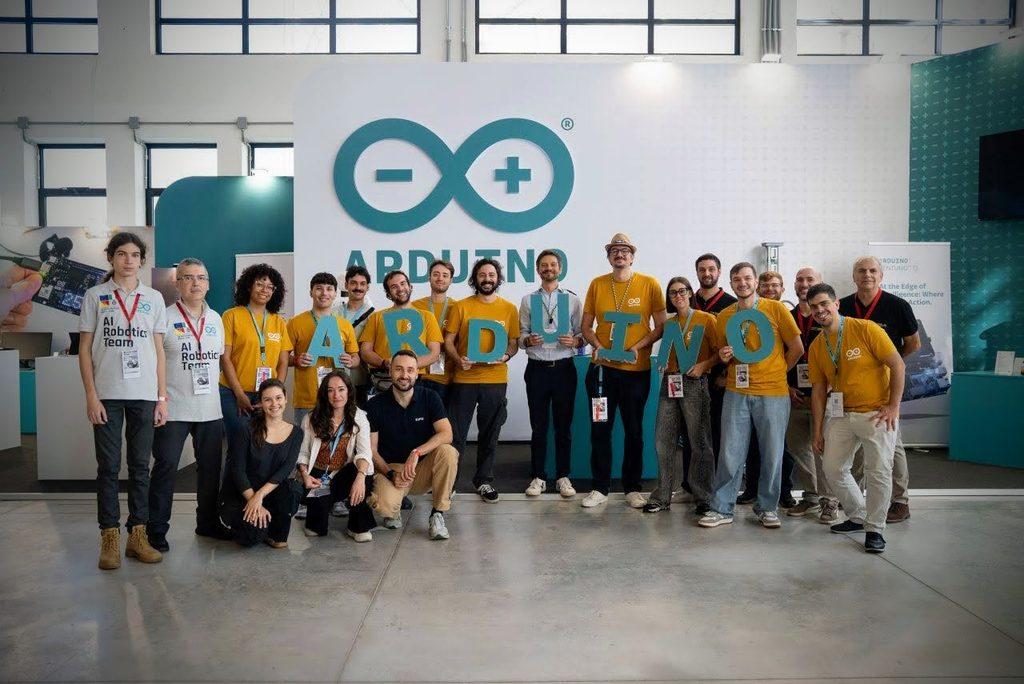
Returning to Maker Faire after our 2025 experience was particularly meaningful. This time,Arduinoinvited me to exhibit at its stand, allowing us to demonstrate some of the projects we had been developing throughFermiLabs.Itand share the engineering challenges behind them with an international audience.
What we brought to the Arduino stand
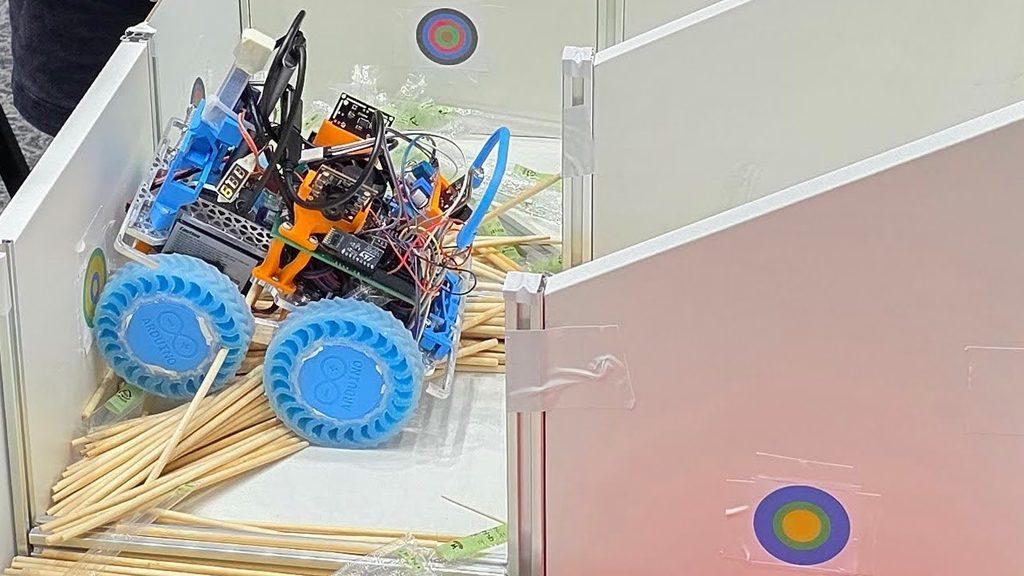
One of the main attractions we showcased was ourRoboCupJunior Rescue Maze autonomous robot, developed through successive generations of Arduino hardware, from the GIGA R1 WiFi to the UNO Q. The project combines real-time motor control, multiple sensors, autonomous navigation, 3D maze mapping, computer vision, and AI-assisted perception. Our objective has always been to go beyond simply building a competition robot: we want to explore how increasingly complexroboticssystems can become more capable, efficient, and accessible.
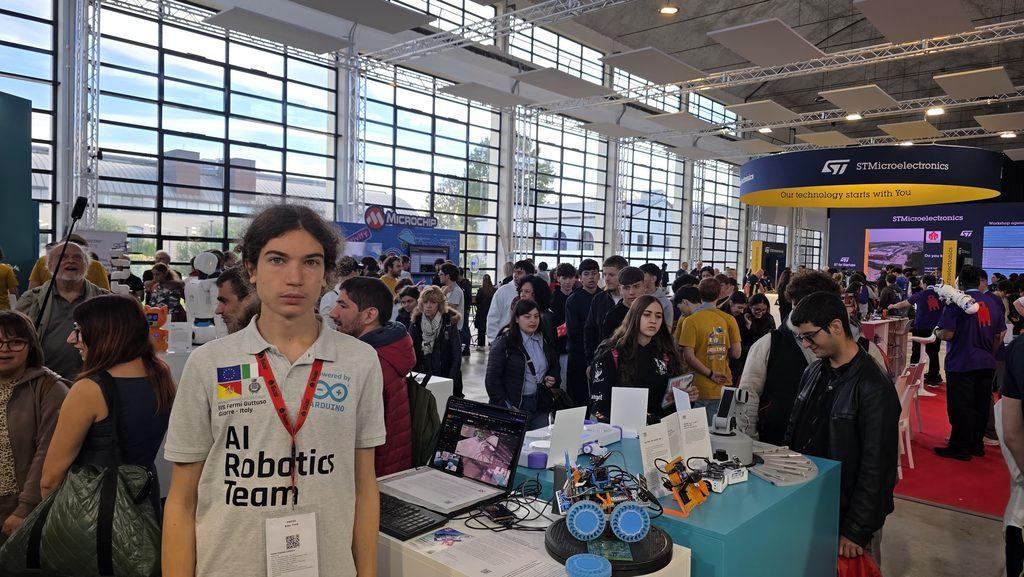
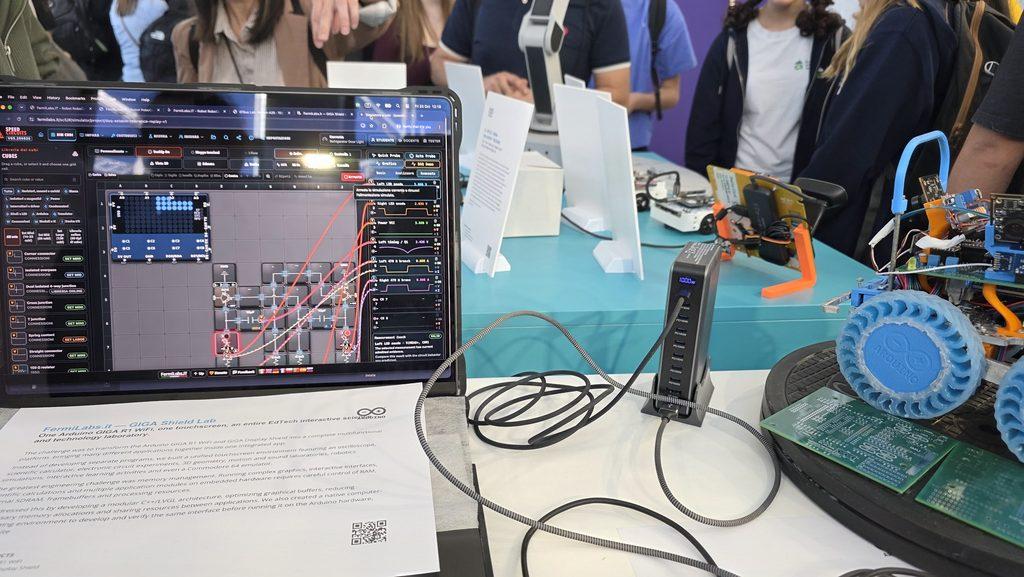
I also demonstrated work developed around theArduino GIGA R1WiFi and GIGA Display Shield, using C++ and LVGL to create interactive engineering applications. These include a scientific calculator, mathematical and graphical tools, measurement-oriented interfaces, and even a functioningCommodore 64 emulator, complete with BASIC programming and memory inspection capabilities. It was exciting to demonstrate how a single embedded platform can become an entire interactive laboratory.
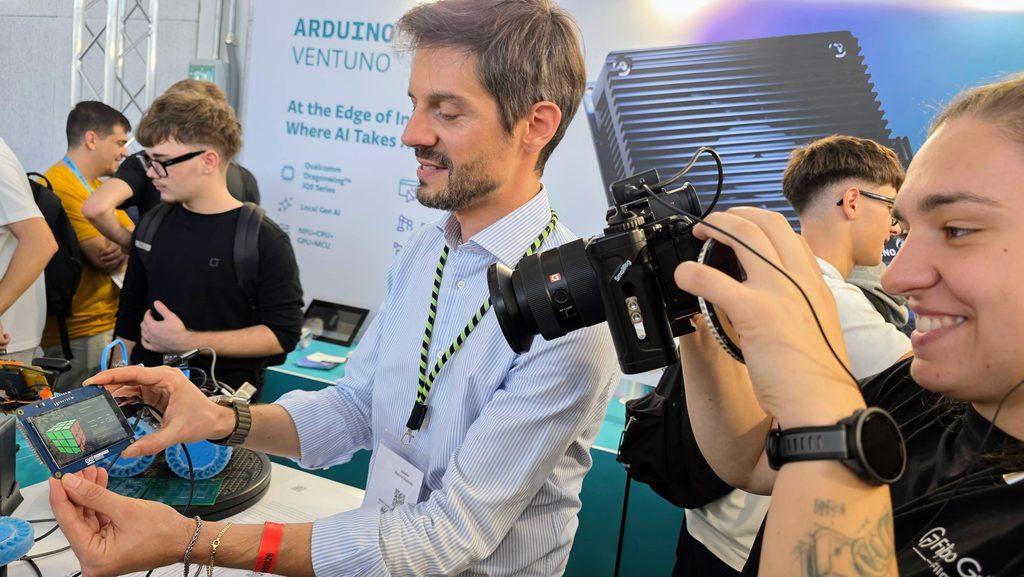
Beyond the visible demonstrations, I had opportunities to discuss the software engineering behind our projects, includingEFBus, my MCU–Linux communication architecture forArduino UNO Q, and our independent work on bringingDewesoftandOpenDAQconcepts and capabilities to Arduino platforms. These projects address problems that become increasingly important as embedded systems evolve: transferring data efficiently, preserving signal information, coordinating real-time control with Linux applications, and turning prototypes into reliable engineering tools.
From RoboCupJunior to the world stage
Our participation in Maker Faire was also the continuation of an extraordinary journey through competitive robotics. In 2026, following national and international competition experience, we travelled from Sicily toIncheon, South Korea, to compete in the RoboCupJunior World Championship, where our Rescue Maze team finished among the world’s top ten.
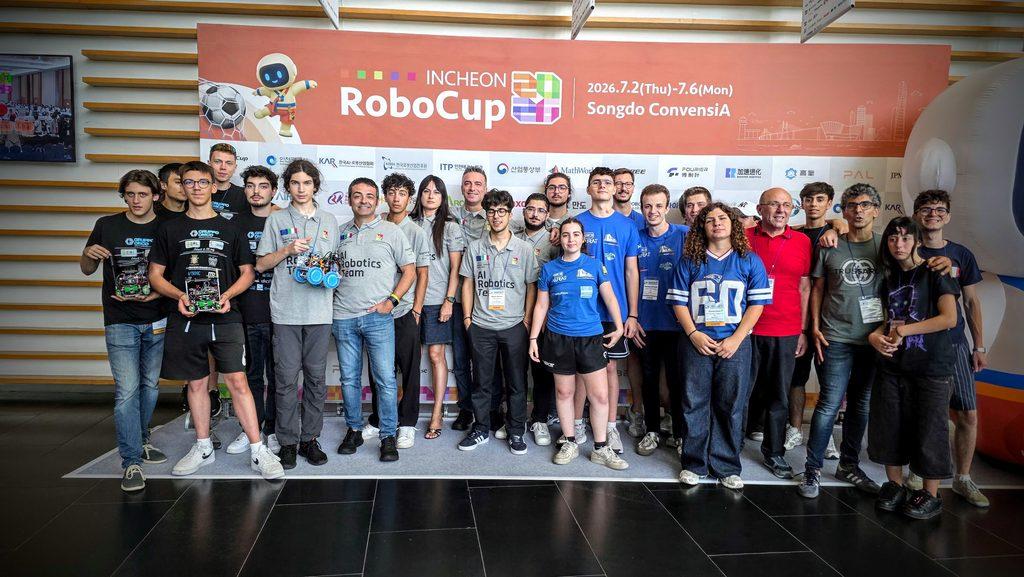
Reaching the World Championship was not simply a competition milestone. It represented years of designing, manufacturing, programming, debugging, and repeatedly rebuilding our robots, learning from failures and working together under demanding conditions, and handling previously unthinkable tasks
None of this would have been the same without the support of companies willing to invest their trust, expertise, and resources in young makers.Arduinohas supported our robotics development with hardware, technical exchanges, visibility, and opportunities to present our work.Dewesofthas been an important supporter of our experimental engineering journey, helping us develop our capabilities in data acquisition, instrumentation, and measurement.
Their contribution demonstrates how meaningful it can be when established technology companies give young people the tools and opportunities to transform ambitious ideas into working prototypes.
What it means to demonstrate your own work
There is something completely different about presenting a project to the public rather than developing it quietly in a laboratory.
At Maker Faire, every demonstration becomes a conversation. Visitors ask questions you had not anticipated, experienced engineers challenge your design decisions, students become curious about how something works, and people from completely different backgrounds suggest applications you might never have considered.
Standing at the Arduino booth, surrounded by thousands of visitors attending the event, was both exciting and a responsibility. It meant explaining not only what our prototypes could do, but also how they were designed, what problems we had overcome, and which limitations we were still working to solve.
Some of the most valuable moments came from these exchanges: discussing embedded engineering with Arduino’s team, meetingMassimo Banzi, and exploring future hardware, AI, and measurement technologies withMarta Barbero and Marcello Majonchi. These conversations helped connect our experimental work with the experience and perspectives of people developing technologies used around the world.
Beyond the booth: interviews and new connections
Maker Faire Rome also gave me another opportunity:FermiLabs.It received press accreditation, including access to the event’s press facilities.
As a result, I was able to conduct a series of interviews on Sunday, October 25, with engineers, makers, educators, and student teams presenting their own innovations. The conversations featured Arduino, Qualcomm Academy,STMicroelectronics, Sapienza Rocket Team, Space Eagle, and independent robotics maker Luca Di Lorenzo.
I wanted these interviews to go beyond product presentations and give the people behind the technology a chance to explain their ideas, engineering challenges, achievements, and future ambitions.
A special thank you
I am sincerely grateful toArduinofor welcoming me to its stand, encouraging my projects, and giving me the opportunity to share them with such a wide audience. My thanks also go toDewesoftfor its continued confidence in our engineering initiatives, and to theMaker Faire Rome teamfor the organisation of this remarkable event, the press accreditation, and the opportunities it created.
And, of course, thank you to everyone who stopped to see our prototypes, asked questions, shared ideas, or took the time to speak with me.
For me, Maker Faire is proof that innovation is not only about what you build. It is also about sharing what you have learned, meeting people who challenge you to improve, and discovering how far an idea can go when someone believes in its potential.
Etto Fins — Founder, FermiLabs.It
The interviews
Stefano Implicito — Arduino
🎤 Uncut Interview with Stefano Implicito, Marketing Director at Arduino, discusses the maker community, how Arduino supports developers, Qualcomm technologies, open source and the emerging era of Physical AI. He also shares how he discovered and followed Etto’srocketryand robotics workhttps://youtu.be/LOV2Jf3UW-I

Zach Stern — Qualcomm Academy
🎤 Uncut Interview with Zach Stern of Qualcomm Academy explains the AI Associate Certification: Model to App and how makers, students and professionals can learn to build, train and deploy models on Arduino UNO Q. Training for VENTUNO Q is also under developmenthttps://youtu.be/Kf17PyKKbzM

Luca Di Lorenzo — Independent maker / Arduino collaborator
🎤 Uncut Interview with Luca Di Lorenzo, maker, software engineer, and content creator: introduces Neo, a humanoid robot presented at the Arduino stand. Neo’s face and object recognition, camera system, moving head and arms, grasping objects, and the hands-on design and 3D-printing processhttps://youtu.be/SVDacmhs8Ec

Federico Coddetta — SRT (Sapienza Rocket Team)
🎤 Uncut Interview with Federico Coddetta from Sapienza Rocket Team speaks about Medusa’s structure, avionics, recovery system, parachutes, airbrakes, and scientific payload. The team earned third place in the SDL Payload Challenge at IREC 2026 and discusses future hybrid propulsion developmenthttps://youtu.be/z0hR3qomCIU

Lorenzo — Icaro engineering team — Space Eagle
🎤 Uncut Interview with Space Eagle Rocket Team: the modular Icaro rocket, Avionics, motor development and space-related edge AI demonstrations. The team reports an Icaro flight reaching approximately one kilometre; its official mission record gives 900 metres on 25 July 2026 with a commercial J425 motorhttps://youtu.be/ZyPDkApk-jc

Alessandro Capra — STMicroelectronics
🎤 A detailed and uncut tour of the STMicroelectronics stand at Maker Faire Rome 2026. Alessandro Capra presents the STM32 ecosystem, workshops and student competitions, e-mobility, MEMS sensors, embedded AI, robotics, predictive maintenance, and an interactive joint demonstration with Arduinohttps://youtu.be/sTyvwP2NVn0

Explore FermiLabs
Engineering projects·Maker Faire Rome 2025·About Etto Fins and FermiLabs